
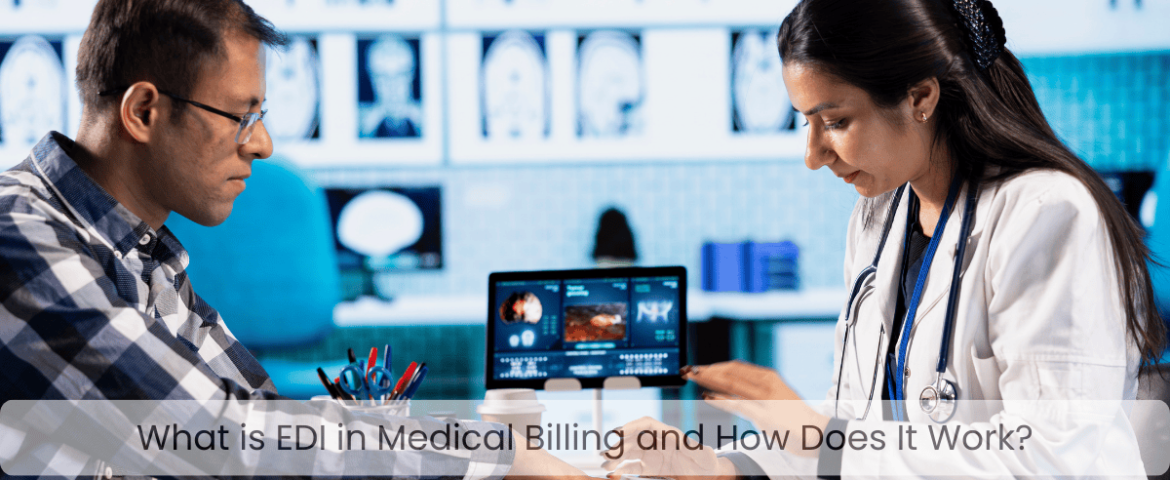
In 2026, the healthcare industry has moved far beyond the “sea of paper” that once defined it. Today, EDI in medical billing is the heartbeat of a high-performing revenue cycle. With tightening margins and payers utilizing advanced AI for claim scrutiny, Electronic Data Interchange (EDI) is no longer just a convenience—it is a survival requirement for modern practices.
By utilizing healthcare EDI, medical businesses can safeguard data exchanges, accelerate information turnaround, and virtually eliminate the manual delays that lead to revenue leakage.
What Is EDI in Medical Billing?
EDI in medical billing is the secure, automated transfer of structured healthcare data between providers and insurance companies for the purpose of reimbursement. Instead of manual portal entries or paper mailings, EDI allows systems to “talk” to one another using a universal language.
How it works in the modern workflow:
- Conversion: Your billing software pulls data from the EMR and converts it into a standardized EDI format (ASC X12).
- Transmission: The data is securely sent via a clearinghouse or direct connection to the payer.
- Validation: Systems automatically check for “clean claim” edits before the payer even sees the file.
- Response: The payer sends back electronic status updates and payment advice in real-time.
The 2026 Role of EDI in the Revenue Cycle
EDI supports every stage of Revenue Cycle Management (RCM). As we move deeper into 2026, the focus has shifted toward proactive adjudication—identifying errors before they become denials.
- Eligibility Verification: Instantly confirming coverage before the patient leaves the office.
- Real-Time Claim Submission: Reducing “days in AR” by submitting batches instantly.
- Automated Remittance: Syncing payments directly to patient accounts without manual posting.
Is your billing efficiency lagging?
Streamline your workflow and stop front-end rejections with the EDI experts at I-Conic Solutions.
Top Healthcare EDI Transaction Types
To maintain HIPAA compliance, all entities must use the ASC X12 protocol. Here are the most critical transaction sets used today:
- 837 (Healthcare Claim): The primary format for submitting claim and encounter data.
- 835 (Electronic Remittance Advice): Used by insurers to send payment details and Explanation of Benefits (EOB).
- 270/271 (Eligibility Inquiry & Response): The “handshake” used to verify a subscriber’s benefits.
- 276/277 (Claim Status): Allows providers to request and receive updates on a claim’s progress.
- 278 (Prior Authorization): Used to request service reviews and authorizations from payers.
- 834 (Enrollment): Used by employers and unions to enroll members in health plans.
Challenges and 2026 Solutions
While EDI in medical billing is transformative, implementation comes with hurdles that require strategic solutions.
| Challenge | 2026 Solution |
| Legacy System Integration | Use Cloud-based APIs to bridge the gap between old EMRs and modern EDI portals. |
| Staff Resistance | Focus on “Ease of Use” training—show the team how EDI eliminates their most tedious tasks. |
| Data Security & Breaches | Ensure your EDI software is 100% HIPAA-compliant with end-to-end encryption. |
| Setup Complexity | Start with a “Phased Integration”—pilot EDI with your top payer first before a full rollout. |
Conclusion
EDI in medical billing has evolved from a simple data swap to a comprehensive financial strategy. By adopting healthcare EDI standards, organizations can reduce administrative stress, enhance data accuracy, and ensure that their providers can focus on what matters most: patient care.
FAQs
It is the electronic exchange of standardized billing information between healthcare providers and payers, replacing manual paper processes with secure, digital transactions.
Standardization. It ensures that all parties use the same data formats, which reduces human error, speeds up reimbursements, and lowers administrative costs.
Yes. HIPAA regulations require all “covered entities” to use universal standards (ASC X12) for electronic health transactions to ensure privacy and security.
EDI systems use “snip levels” of validation to check for missing or incorrect data across seven different levels before the claim is submitted, ensuring higher clean-claim rates.